





























Understanding the Core of ISO 27001 Compliance
The Statement of Applicability (SoA) is a cornerstone document within the ISO 27001 framework, detailing all security controls pertinent to an organisation and justifying their inclusion or exclusion. This document transcends a mere checklist; it serves as a strategic instrument that aligns security measures with organisational needs, ensuring comprehensive compliance with the ISO 27001 standard. With over 40,000 organisations worldwide certified, the SoA’s importance in achieving compliance is undeniable.
What is the Statement of Applicability?
The SoA is a tailored document that outlines the specific security controls an organisation has implemented, along with justifications for their selection. It acts as a bridge between the risk assessment process and the actual implementation of controls, providing a clear rationale for each decision. This transparency is crucial for demonstrating an organisation’s commitment to information security, as emphasised by cybersecurity expert John Smith.
How Does It Fit into ISO 27001 Compliance?
In the context of ISO 27001, the SoA is integral to the Information Security Management System (ISMS), serving as a dynamic document that evolves with the organisation’s risk environment. It ensures that all necessary controls are in place and that any exclusions are well-justified, aligning with the standard’s requirements for risk management and continuous improvement (ISO 27001:2022 Clause 5.5).
Why is It Crucial for Organisations?
The SoA's role in compliance extends beyond mere documentation. It impacts overall information security management by providing a structured approach to implementing and monitoring controls, thereby enhancing the organisation's security posture. For Compliance Officers, Chief Information Security Officers, and CEOs, the SoA is a testament to their commitment to safeguarding sensitive information.
At ISMS.online, we offer comprehensive tools to streamline the creation of an effective SoA, ensuring alignment with ISO 27001:2022's key elements. Our platform simplifies the process, providing templates and guidance tailored to your organisation's unique needs. Discover how we can support your compliance journey by exploring our solutions today.
Book a demoWhat Purpose Does the Statement Serve?
The Statement of Applicability (SoA) is integral to the ISO 27001 framework, meticulously documenting security controls relevant to an organisation. Its primary function is to justify the inclusion or exclusion of these controls, ensuring they align with identified risks and compliance efforts. This alignment supports risk management by tailoring security measures to address specific vulnerabilities and threats (ISO 27001:2022 Clause 5.5).
Documenting Control Decisions
As a comprehensive record, the SoA details the rationale behind each control decision. By providing clear justifications, it bridges the gap between risk assessments and the implementation of security measures. This transparency not only demonstrates an organisation’s commitment to safeguarding information but also facilitates audits and reviews, ensuring continuous improvement and compliance with international standards.
Essential for ISO 27001 Certification
Achieving ISO 27001 certification hinges on the effective documentation and management of security controls. The SoA plays a vital role in this process, acting as a dynamic document that evolves with the organisation’s risk environment. Its ability to adapt to changing threats and business needs underscores its importance in maintaining a robust Information Security Management System (ISMS).
Supporting Risk Management and Compliance
Beyond documentation, the SoA is instrumental in aligning security controls with business objectives. This alignment ensures that security measures are not only compliant but also strategically integrated into the organisation’s operations. By doing so, the SoA enhances the organisation’s security posture, providing a structured approach to risk management and compliance.
The Statement of Applicability is a strategic tool that underpins an organisation’s commitment to information security. Its role in documenting control decisions, supporting risk management, and facilitating ISO 27001 certification makes it an indispensable component of any robust ISMS. This foundation sets the stage for exploring the broader implications of security controls in achieving compliance and safeguarding organisational assets.
ISO 27001 made easy
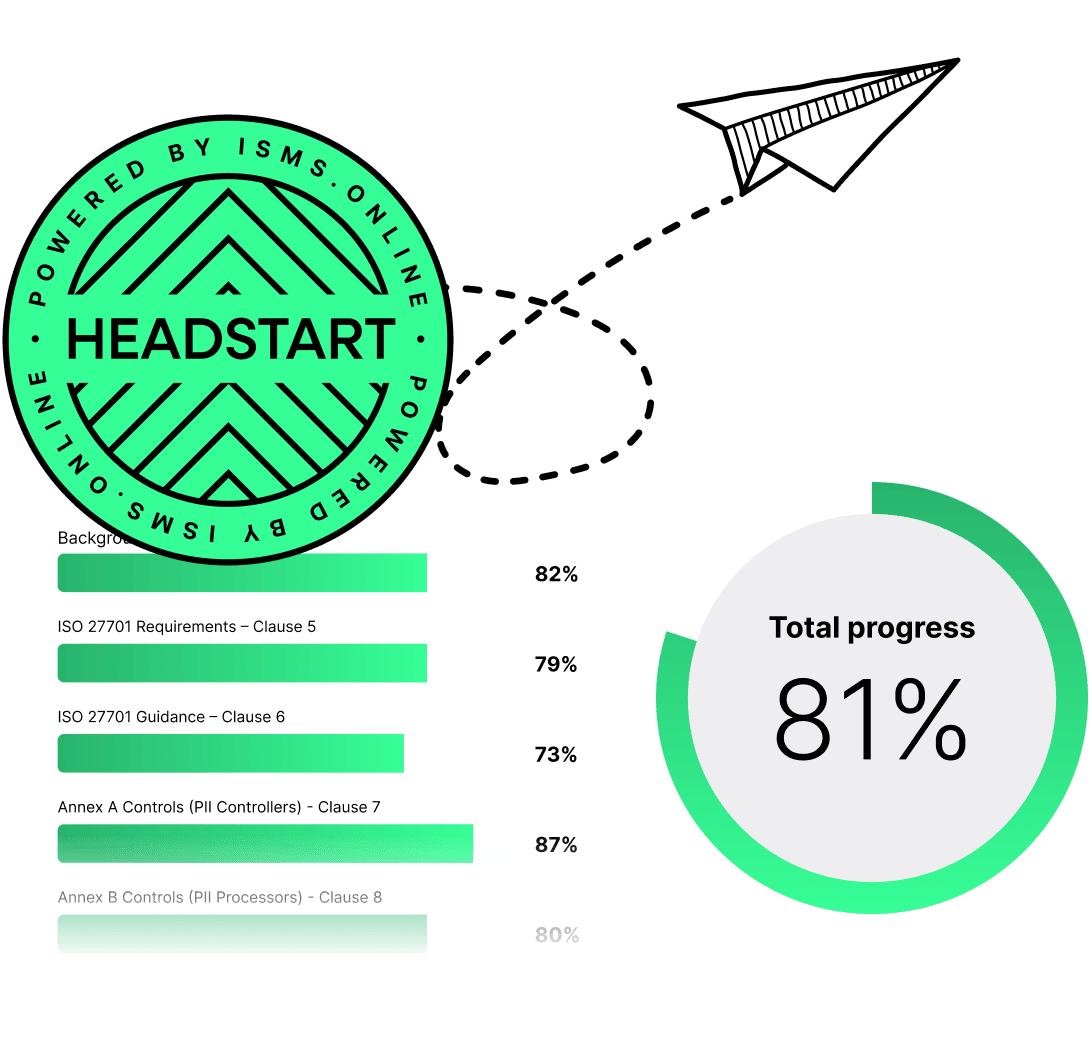
An 81% Headstart from day one
We’ve done the hard work for you, giving you an 81% Headstart from the moment you log on. All you have to do is fill in the blanks.
How to Create a Statement of Applicability
Crafting a Statement of Applicability (SoA) is crucial for aligning with the ISO 27001:2022 standard. This document not only lists applicable security controls but also justifies their inclusion or exclusion, ensuring alignment with organisational risks and compliance efforts.
Step-by-Step Guide to Crafting the SoA
-
Conduct a Risk Assessment: Identify potential threats and vulnerabilities within your organisation. This assessment forms the foundation for selecting appropriate controls (ISO 27001:2022 Clause 5.3).
-
Select and Document Controls: Choose controls from Annex A that address identified risks. Clearly document each control decision, providing justification for its inclusion or exclusion (ISO 27001:2022 Annex A).
-
Best Practices for Documentation: Ensure that your documentation is clear and concise. This transparency not only facilitates audits but also supports continuous improvement by allowing easy updates as the risk environment evolves.
-
Avoid Common Pitfalls: Regularly review and update the SoA to reflect changes in your organisation’s risk environment. Avoid the trap of static documentation by integrating feedback and lessons learned from security incidents.
Why Regular Updates Matter
The SoA should be a living document, adapting to new threats and organisational changes. Regular updates ensure that it remains relevant and effective, supporting your organisation’s commitment to information security.
Practical Guidance for Success
- Engage Stakeholders: Involve key stakeholders in the SoA development process to ensure comprehensive coverage and buy-in.
- Utilise Automation: Consider using automated tools to streamline risk assessments and control selection, reducing manual errors and enhancing efficiency.
By following these steps and best practices, your organisation can develop a Statement of Applicability that not only meets compliance requirements but also strengthens your overall security posture. This strategic document serves as a cornerstone of your Information Security Management System, ensuring that your controls are both effective and aligned with your business objectives.
Why Focus on Annex A Controls?
What is the Role of Annex A Controls?
Annex A controls are the backbone of the ISO 27001 standard, providing a structured approach to managing security risks. These 93 controls, spanning organisational, people, physical, and technological domains, ensure a comprehensive strategy for information security. By implementing these controls, organisations can systematically address vulnerabilities and align their security measures with best practices.
How Do They Address Security Risks?
Annex A controls are instrumental in identifying and mitigating security risks. They offer a framework for assessing threats and implementing safeguards. For example, controls related to access management and data protection are designed to prevent unauthorised access and data breaches, thereby enhancing the organisation’s security posture. By addressing these risks proactively, organisations can reduce the likelihood of security incidents and protect their sensitive information.
Why Are They Crucial for Compliance?
Compliance with the ISO 27001 standard is not just about ticking boxes; it’s about demonstrating a commitment to information security. Annex A controls are essential for achieving this compliance, as they provide the necessary framework to meet regulatory requirements and industry standards. Implementing these controls ensures that organisations are well-prepared to handle audits and reviews, showcasing their dedication to maintaining a robust security framework.
How Do They Support the Overall Security Framework?
Beyond compliance, Annex A controls are integral to building a resilient security framework. They enable organisations to adapt to evolving threats and changing business environments, ensuring that security measures remain effective over time. By continuously monitoring and updating these controls, organisations can maintain a proactive stance against emerging risks, safeguarding their assets and reputation.
Implementing Annex A controls is not just a checklist but a strategic tool for enhancing an organisation’s security framework. By addressing security risks and supporting compliance, these controls provide a solid foundation for achieving ISO 27001 certification and ensuring long-term information security.

Free yourself from a mountain of spreadsheets
Embed, expand and scale your compliance, without the mess. IO gives you the resilience and confidence to grow securely.
When to Review and Update the Statement of Applicability
Revisiting the Statement of Applicability (SoA) regularly is essential for maintaining its relevance within your organisation’s security framework. This document should be refreshed periodically to ensure it aligns with emerging threats and organisational changes.
Frequency of Reviews
It’s advisable to assess the SoA at least annually or whenever significant changes occur in your organisation’s risk environment. This ensures the document accurately reflects the current security posture and complies with ISO 27001 requirements (ISO 27001:2022 Clause 5.5).
Triggers for Updates
Several factors can necessitate updates to the SoA:
– Organisational Changes: Mergers, acquisitions, or restructuring can alter risk profiles.
– Technological Advancements: New technologies may introduce vulnerabilities.
– Regulatory Changes: Updates in compliance requirements should prompt a reassessment of controls.
Importance of Regular Review
Regular assessments are vital for ensuring ongoing compliance and relevance. They enable organisations to adapt to new threats and maintain a robust security framework. By aligning the SoA with current threats and organisational changes, updates enhance both compliance and security.
Enhancing Compliance and Security
Updating the SoA is not just about compliance; it’s about strategic alignment with business objectives. Regular updates ensure that security measures are not only effective but also integrated into your organisation’s operations. This proactive approach reduces the likelihood of security incidents and strengthens the overall security posture.
At ISMS.online, we offer tools to streamline the SoA review process, making it easier for you to adapt to changes and maintain compliance. Our platform provides templates and guidance tailored to your organisation’s needs, ensuring that your SoA remains a living document that evolves with your business. Embrace the opportunity to enhance your security framework and safeguard your assets today.
Where to Access Compliance Resources
Navigating ISO 27001 compliance is simplified with the right tools and resources. Our platform, ISMS.online, offers a comprehensive suite designed to optimise your compliance journey. Here’s how you can effectively utilise these resources:
Comprehensive Tools and Documentation
- ISO 27001:2022 Guidelines: Access essential standards documentation from the official ISO website, providing a foundational resource for your compliance efforts.
- ISMS.online Solutions: Our tailored tools empower you to efficiently manage and monitor your Information Security Management System (ISMS), ensuring alignment with ISO 27001:2022 requirements.
Leveraging Templates and Guides
Templates and guides are crucial for crafting and maintaining the Statement of Applicability (SoA). They offer structured frameworks that ensure all necessary elements are included, minimising the risk of oversight. Our templates align with ISO 27001:2022 standards, facilitating a seamless compliance process.
Expert Guidance and Support
Expert advice is invaluable when navigating complex compliance landscapes. ISMS.online connects you with industry experts who provide personalised support. Whether you’re beginning your compliance journey or enhancing your existing framework, our experts are ready to assist.
Streamlining Your Compliance Journey
Utilising these resources streamlines your compliance efforts, reducing time and complexity. Automation tools within ISMS.online enhance efficiency, allowing you to focus on strategic initiatives rather than administrative tasks.
Embrace the opportunity to strengthen your compliance framework with ISMS.online’s comprehensive resources and expert guidance. Begin your journey towards robust information security management today.

Manage all your compliance, all in one place
ISMS.online supports over 100 standards and regulations, giving you a single platform for all your compliance needs.
Can Automation Streamline the Process?
How Automation Enhances the Statement of Applicability
Automation transforms the creation and maintenance of the Statement of Applicability (SoA) by streamlining control tracking, evidence collection, and version management. This shift reduces manual effort and errors, enabling organisations to concentrate on strategic initiatives.
Benefits of Automation
- Efficiency Gains: Automation expedites the SoA process, facilitating rapid updates and revisions.
- Enhanced Accuracy: Automated tools minimise human error, ensuring the SoA remains precise and current.
- Resource Allocation: Automating repetitive tasks liberates resources for critical areas of information security management.
Potential Challenges
While automation offers substantial benefits, challenges such as system integration and data accuracy can arise. Organisations must carefully plan and implement strategies to overcome these hurdles and maximise automation’s advantages.
Improving Efficiency and Accuracy with Automation
AI’s role in compliance processes provides real-time insights and predictive analytics, supporting risk management. Automated systems can identify potential risks and recommend controls, enhancing the SoA’s effectiveness. By adopting AI, organisations can anticipate threats and maintain a robust security posture.
Automation is more than a tool; it’s a strategic enabler that transforms SoA creation and maintenance. By integrating automation into compliance processes, organisations achieve greater efficiency, accuracy, and resilience in their information security management systems. This evolution underscores the need to adapt these principles to changing circumstances.
Further Reading
Overcoming Challenges in the Statement of Applicability Process
Navigating Potential Obstacles
Crafting an SoA for ISO 27001 presents challenges. Organisations grapple with complex compliance requirements and integration challenges, which can obstruct the alignment of security controls with organisational goals.
Strategies for Success
To tackle these challenges, structured methodologies are essential. Conducting a comprehensive risk assessment is crucial to identify potential threats and vulnerabilities. This foundational step ensures that selected controls effectively address specific risks. Engaging stakeholders early fosters collaboration and buy-in, enhancing the SoA’s relevance and effectiveness.
Harnessing Technology
Technology plays a crucial role in overcoming SoA process obstacles. Automated tools streamline risk assessments and control selection, minimising manual errors and boosting efficiency. By automating repetitive tasks, organisations can focus resources on critical areas of information security management.
Proactive Measures for Continuous Improvement
Proactive strategies are vital for preemptively addressing potential challenges. Regularly reviewing and updating the SoA ensures it remains relevant and aligned with evolving threats and organisational changes. This dynamic document should be revisited periodically to reflect the current security posture and maintain compliance with ISO 27001 requirements (ISO 27001:2022 Clause 5.5).
This approach underscores the importance of adapting these principles to changing circumstances.
How to Justify Control Inclusion or Exclusion
Criteria for Justifications
Crafting the Statement of Applicability (SoA) for ISO 27001:2022 requires robust justifications for control decisions. These justifications must stem from thorough risk assessments and align with your organisation’s business objectives. By assessing potential threats and vulnerabilities, you can select controls that effectively mitigate risks, thereby enhancing both compliance and security posture.
Documenting Justifications
Clear documentation is crucial for substantiating control decisions. Articulate each justification, detailing the rationale for including or excluding specific controls. This documentation not only facilitates audits but also ensures transparency and accountability within your Information Security Management System (ISMS). By maintaining comprehensive records, you demonstrate your commitment to information security and compliance with ISO 27001:2022 (Clause 5.5).
Importance of Justification
Justifying control decisions extends beyond compliance. It ensures the SoA remains a dynamic document, reflecting your organisation’s evolving risk environment and strategic priorities. By aligning controls with business objectives, you can optimise security measures, reduce incident likelihood, and foster a culture of continuous improvement and risk management.
Supporting Compliance and Risk Management
Justifications are vital for linking identified risks to implemented controls, ensuring security measures are compliant and strategically integrated into your operations. This alignment enhances your ability to adapt to changing threats and maintain a robust security posture.
This approach underscores the necessity of adapting these principles to changing circumstances, ensuring the SoA evolves with your organisation’s needs and challenges.
Why is Leadership Support Essential?
Impact of Management Commitment
Leadership commitment is fundamental to implementing a robust Statement of Applicability (SoA). By aligning security measures with organisational goals, leadership cultivates a pervasive security culture. This commitment goes beyond resource allocation, establishing a proactive compliance and risk management ethos (ISO 27001:2022 Clause 5.1).
Role of Management in Compliance Success
Effective leadership is crucial for compliance success. By providing clear direction and unwavering support, management transforms the SoA into a dynamic framework that adapts to organisational needs. Regular reviews and updates ensure security controls align with evolving risks and business objectives. Leadership also fosters a culture of continuous improvement, integrating feedback and lessons learned into the compliance process.
Driving Compliance Success
Leadership support is vital for embedding a security-centric culture within the organisation. By setting policies and leading by example, management underscores the significance of compliance through decisive actions. Prioritising security enables management to drive compliance success, ensuring the SoA remains relevant and effective against emerging threats and challenges.
Leadership commitment is essential for the successful implementation and maintenance of the SoA. By allocating resources, nurturing a security culture, and championing continuous improvement, leadership ensures the organisation remains compliant and resilient amidst evolving risks. This approach highlights the importance of adapting these principles to changing circumstances, ensuring the SoA remains a living document that evolves with the organisation’s needs and challenges.
What Advantages Does a Comprehensive Statement Offer?
A meticulously crafted Statement of Applicability (SoA) is indispensable for reinforcing an organisation’s information security management. It delivers numerous benefits that bolster compliance, risk management, and organisational alignment.
Enhancing Compliance
A comprehensive SoA serves as a definitive guide for implementing security controls, facilitating audits, and ensuring adherence to the ISO 27001:2022 standard. By documenting control decisions and justifications, the SoA underscores an organisation’s dedication to maintaining robust security measures, thereby reinforcing compliance efforts.
Importance for Risk Management
The SoA is pivotal in risk management by aligning security controls with identified threats and vulnerabilities. This alignment ensures that resources are allocated effectively, minimising the likelihood of security incidents and enhancing the organisation’s overall security posture. By continuously updating the SoA, organisations can adapt to evolving risks and maintain a proactive approach to risk management.
Aligning with Organisational Goals
Beyond compliance and risk management, the SoA aligns security measures with organisational objectives, supporting the continuous improvement of the Information Security Management System (ISMS). This alignment fosters a culture of security awareness and accountability, ensuring that security initiatives are integrated into the organisation’s strategic goals.
Facilitating Audits and Reviews
A comprehensive SoA simplifies the audit process by providing a structured framework for assessing security controls. This clarity not only facilitates external audits but also supports internal reviews, enabling organisations to identify areas for improvement and ensure ongoing compliance with ISO 27001:2022 requirements.
Incorporating these elements into your SoA not only strengthens your security framework but also enhances your organisation’s ability to navigate the complex landscape of information security. With ISMS.online, you can streamline the creation and maintenance of your SoA, ensuring that it remains a dynamic document that evolves with your business needs. Embrace the opportunity to enhance your compliance framework and safeguard your assets today.
Book a Demo with ISMS.online
Why Choose ISMS.online?
Navigating ISO 27001 compliance becomes straightforward with ISMS.online. Our platform offers solutions that simplify your compliance journey, ensuring your organisation stays ahead of evolving standards. By integrating automation and expert guidance, we provide an experience that enhances your compliance strategy.
How Can ISMS.online Enhance Your Compliance?
- Optimised Processes: Experience the power of automation in managing compliance activities, reducing errors and saving valuable time.
- Customised Solutions: Our platform adapts to your specific needs, offering a tailored approach to compliance that aligns with your business objectives.
- Expert Insights: Benefit from our team’s expertise, providing support to navigate the complexities of ISO 27001:2022 (Clause 5.5).
What Are the Advantages of Automation?
Automation revolutionises compliance management, offering increased accuracy and efficiency. By automating repetitive tasks, you can focus on strategic initiatives, enhancing your organisation’s security posture and reducing the risk of non-compliance.
Take the Next Step
Book a demo with ISMS.online today to explore how our solutions can transform your compliance journey. Discover the benefits of automation, tailored solutions, and expert guidance, and take the first step towards a more secure and compliant future.
Book a demoFrequently Asked Questions
Understanding the Statement of Applicability in ISO 27001
The Statement of Applicability (SoA) is a fundamental document within the ISO 27001 framework, detailing the security controls pertinent to your organisation. It serves as a strategic guide, bridging risk assessments with the implementation of security measures to ensure alignment with your objectives.
What Role Does the Statement Play?
The SoA outlines the specific security controls your organisation has implemented, providing clear justifications for their inclusion or exclusion. This transparency is essential for demonstrating your commitment to information security, effectively linking risk assessments with security measures.
Importance for Compliance
Compliance with the ISO 27001 standard hinges on the effective documentation and management of security controls. The SoA plays a vital role in this process by acting as a dynamic document that evolves with your organisation’s risk environment. Its ability to adapt to changing threats and business needs underscores its importance in maintaining a robust Information Security Management System (ISMS).
Role in Documenting Controls
The SoA serves as a comprehensive record, detailing the rationale behind each control decision. By providing clear justifications, it facilitates audits and reviews, ensuring continuous improvement and compliance with international standards. This alignment ensures that security measures are not only compliant but also strategically integrated into your operations.
Impact on Risk Management
Beyond documentation, the SoA is instrumental in aligning security controls with business objectives. This alignment ensures that resources are allocated effectively, reducing the likelihood of security incidents and enhancing your organisation’s overall security posture. By continuously updating the SoA, organisations can adapt to evolving risks and maintain a proactive approach to risk management.
The Statement of Applicability transcends a mere checklist; it is a strategic tool that underpins your commitment to information security. Its role in documenting control decisions, supporting risk management, and facilitating ISO 27001 compliance makes it an indispensable component of any robust ISMS. This foundation sets the stage for exploring the broader implications of security controls in achieving compliance and safeguarding organisational assets.
How Often Should the Statement of Applicability Be Reviewed?
When is a Review Necessary?
Regularly revisiting the Statement of Applicability (SoA) is essential to align it with your organisation’s evolving risk environment. Significant changes, such as organisational restructuring, technological advancements, or regulatory updates, can impact your risk profile, necessitating a reassessment of controls.
Frequency of Reviews
Conduct reviews at least annually, or more frequently if significant changes occur. This proactive approach ensures the SoA reflects your current security posture and aligns with ISO 27001 requirements (ISO 27001:2022 Clause 5.5).
Triggers for Updates
Several factors can prompt updates to the SoA:
– Organisational Shifts: Mergers, acquisitions, or restructuring can alter risk profiles.
– Technological Innovations: New technologies may introduce vulnerabilities.
– Regulatory Adjustments: Changes in compliance requirements necessitate reassessment.
Importance of Regular Review
Regular reviews enable your organisation to adapt to new threats and maintain a robust security framework. By aligning the SoA with current threats and organisational changes, updates enhance both compliance and security.
Enhancing Compliance and Security
Updating the SoA ensures strategic alignment with business objectives. Regular updates integrate security measures into your organisation’s operations, reducing the likelihood of security incidents and strengthening the overall security posture.
Where to Find Compliance Support
Navigating ISO 27001 compliance requires access to the right resources and tools. These elements streamline the process and ensure your organisation remains aligned with international standards.
Available Resources and Tools
A wealth of resources supports your compliance journey. These include comprehensive documentation, templates, and guides that provide a structured framework for implementing and maintaining an effective Information Security Management System (ISMS). By utilising these tools, organisations can efficiently manage compliance activities and ensure adherence to ISO 27001 requirements.
How Can Templates and Guides Assist?
Templates and guides simplify the compliance process. They offer pre-defined structures that help organisations document their security controls and justify their inclusion or exclusion. This not only facilitates audits but also ensures all necessary elements are covered, reducing the risk of oversight. By using these resources, organisations can maintain a clear and concise Statement of Applicability (SoA) that aligns with ISO 27001:2022.
Where Can Expert Advice Be Found?
Expert advice is essential for navigating the intricacies of ISO 27001 compliance. Industry experts provide insights and guidance on best practices, helping organisations address specific challenges and optimise their compliance strategies. Engaging with experts ensures your organisation remains informed about the latest developments and can adapt to evolving regulatory requirements.
Streamlining the Compliance Process
Streamlining compliance involves integrating resources and tools into a cohesive strategy that enhances efficiency and accuracy. Automation plays a key role in this process, reducing manual errors and allowing organisations to focus on strategic initiatives. By adopting a streamlined approach, organisations can achieve compliance more effectively and maintain a robust security posture.
Accessing the right resources and expert guidance is essential for successful ISO 27001 compliance. By utilising available tools, templates, and expert advice, organisations can navigate the complexities of compliance with confidence and ensure their security measures are both effective and aligned with international standards.
Can Automation Assist in Creating the Statement of Applicability?
How Can Automation Enhance the Process?
Automation revolutionises the creation of the Statement of Applicability (SoA) by streamlining complex tasks and reducing manual intervention. Our automated systems efficiently track security controls, manage version histories, and collect essential evidence, ensuring meticulous documentation at each step. This accelerates the process and minimises errors, enhancing overall accuracy.
What Are the Benefits of Automation?
- Enhanced Precision: Automated tools meticulously capture data, ensuring the SoA remains accurate and up-to-date, which is vital for maintaining compliance with ISO 27001:2022 requirements.
- Resource Efficiency: By automating routine tasks, organisations can reallocate resources to strategic initiatives, enhancing overall productivity.
- Consistency: Automation ensures uniformity in documentation, crucial for audits and reviews.
What Challenges Might Arise?
Despite its advantages, automation presents challenges such as system integration and data accuracy. Organisations must carefully plan their automation strategies to address these hurdles effectively. Ensuring seamless integration with existing systems is essential to maximise the benefits of automation.
How Can Automation Enhance Efficiency and Accuracy?
The integration of AI in compliance processes offers real-time insights and predictive analytics, supporting risk management. Automated systems can identify potential risks and suggest appropriate controls, enhancing the overall effectiveness of the SoA. By adopting AI, organisations can proactively address emerging threats and maintain a robust security posture.
Automation is not merely a tool but a strategic enabler that transforms the SoA creation process. By integrating automation into compliance strategies, organisations can achieve greater efficiency, accuracy, and resilience in their information security management systems. This approach underscores the necessity of adapting these principles to evolving circumstances.
Navigating Challenges in the Statement of Applicability Process
Understanding the Obstacles
Crafting a Statement of Applicability (SoA) for ISO 27001:2022 is not without its challenges. Organisations often grapple with the intricacies of compliance requirements and the integration of ISO standards into existing systems. These challenges can hinder the seamless alignment of security controls with organisational objectives.
Overcoming the Challenges
To effectively address these challenges, organisations should adopt a structured approach. Begin with a comprehensive risk assessment to identify potential threats and vulnerabilities. This foundational step ensures that selected controls effectively address specific risks. Engaging stakeholders early in the process fosters collaboration and buy-in, enhancing the SoA’s relevance and effectiveness.
Strategic Approaches to Success
Utilising technology is a powerful strategy for overcoming obstacles in the SoA process. Automated tools streamline risk assessments and control selection, reducing manual errors and enhancing efficiency. By automating repetitive tasks, organisations can allocate resources to more critical areas of information security management.
Proactive Measures for Continuous Improvement
Proactive approaches are essential for addressing potential challenges before they impact the compliance process. Regularly reviewing and updating the SoA ensures it remains relevant and aligned with evolving threats and organisational changes. This dynamic document should be revisited periodically to reflect the current security posture and maintain compliance with ISO 27001 requirements (ISO 27001:2022 Clause 5.5).
Justifying Control Inclusion or Exclusion in the Statement of Applicability
Criteria for Control Decisions
Crafting the Statement of Applicability (SoA) for ISO 27001:2022 demands a foundation in thorough risk assessments. This process evaluates potential threats and vulnerabilities to select controls that effectively mitigate risks. Key criteria include:
- Risk Assessment: Identify and evaluate risks to determine necessary controls.
- Strategic Alignment: Ensure controls align with organisational goals.
- Regulatory Compliance: Meet industry standards to support compliance.
Documenting Justifications
Clear documentation is essential for substantiating control decisions. Each justification should articulate the rationale for including or excluding specific controls. This documentation:
- Facilitates Audits: Enhances transparency and accountability within the Information Security Management System (ISMS).
- Ensures Consistency: Maintains comprehensive records to demonstrate commitment to information security (ISO 27001:2022 Clause 5.5).
Importance of Justification
Justifying control decisions extends beyond compliance. It ensures the SoA remains a dynamic document, reflecting the organisation’s evolving risk environment and strategic priorities. By aligning controls with business objectives, organisations can:
- Optimise Security Measures: Reduce incident likelihood and enhance the security framework.
- Foster Continuous Improvement: Support ongoing risk management and adaptation.
Supporting Compliance and Risk Management
Justifications are crucial for linking identified risks with implemented controls. This alignment ensures security measures are compliant and strategically integrated into operations. By doing so, justifications enhance the organisation’s ability to adapt to changing threats and maintain a robust security posture.
Our platform, ISMS.online, offers tools to streamline this process, ensuring your SoA remains a living document that evolves with your business. Embrace the opportunity to enhance your compliance framework and safeguard your assets today.